If you've never booked a pet photo session before, the most common worry I hear is some version of:
"My dog won't sit still. Won't this be a disaster?"
It almost never is. Dogs that "don't sit still" make great photos for the same reason kids who don't sit still make great photos — the energy is the photo. What I do during a session is built around that. Here's how it actually goes.
Before the session
When you book, I'll send a few quick questions about your dog: their name, age, energy level, what treats they love, what scares them, whether they're reactive to other dogs, and whether they have any quirks I should know about. Two-minute questionnaire. It's the difference between me showing up cold and me showing up already knowing your dog has a thing about hats and that a squeaky banana is the only toy that works.
I'll also ask you to bring their favorite treats — high-value stuff, the kind they don't get every day — a favorite toy (especially one that makes a sound), your patience, and a second person if possible, especially for puppies or multi-dog sessions. You don't need to bathe them right before, dress them up, or train them on anything in advance. We'll work with the dog you have.
The first few minutes
When you arrive (or when I arrive at your home for an on-location session), I don't pick up the camera right away. The first few minutes belong to the dog. I let them explore the space, sniff me, check things out. I sit on the floor. I'm patient. I don't try to win them over with treats yet — I want them to be comfortable, not over-excited. Once they've decided I'm not a threat, the rest of the session is much easier.
This is the most important part of the whole session, and it's the part most photographers skip.
How I get their attention
Once the dog is comfortable, I work with four tools: treats, sound, patience, and repetition.
- Treats are for rewarding, not bribing. I keep them out of frame and use them sparingly — high-value treats given for being calm or making good eye contact, not held over their head to force a pose.
- Sound is for capturing the alert-ear-perked-up look. I use a squeaky toy, a kazoo, my own voice, weird mouth noises — whatever I haven't used yet. Dogs habituate quickly to any one sound, so the trick is variety. The first squeak might get a great look; the fifth one in a row gets nothing.
- Patience is the third tool. I don't push for a specific shot. If your dog needs to lie down for a minute, we lie down for a minute. If they need to bark at the cat outside, they bark at the cat outside. The session works around them.
- Repetition is the fourth. Most of what I'm asking the dog to do isn't intuitive to them — sit there, hold still, look this way. I'll give the same cue multiple times, sometimes a dozen, and that's normal. They aren't slow; they're figuring out what I'm asking. They always get it eventually.
One thing I almost never use: flash. The sudden bright light can startle a dog, and a startled dog stops trusting the room very quickly. I work with the continuous or natural light in my studio or your home instead.
Reading the dog
Throughout the session I'm watching for signs of overwhelm: hard staring, lip-licking, yawning, panting that's faster than the room is warm, trying to leave the space. When I see those, I stop, put the camera down, and let the dog rest. I'd rather get fewer frames in a calm dog than a hundred frames of a stressed one.
The opposite is also true. If a dog is locked in and playful, I keep going. The best photos almost always come during one of those windows.
Common scenarios
- Anxious or shy dogs. We slow everything down. I work from across the room with a longer lens. I let them come to me. The photos that work are usually of the dog with their person, where they feel safest.
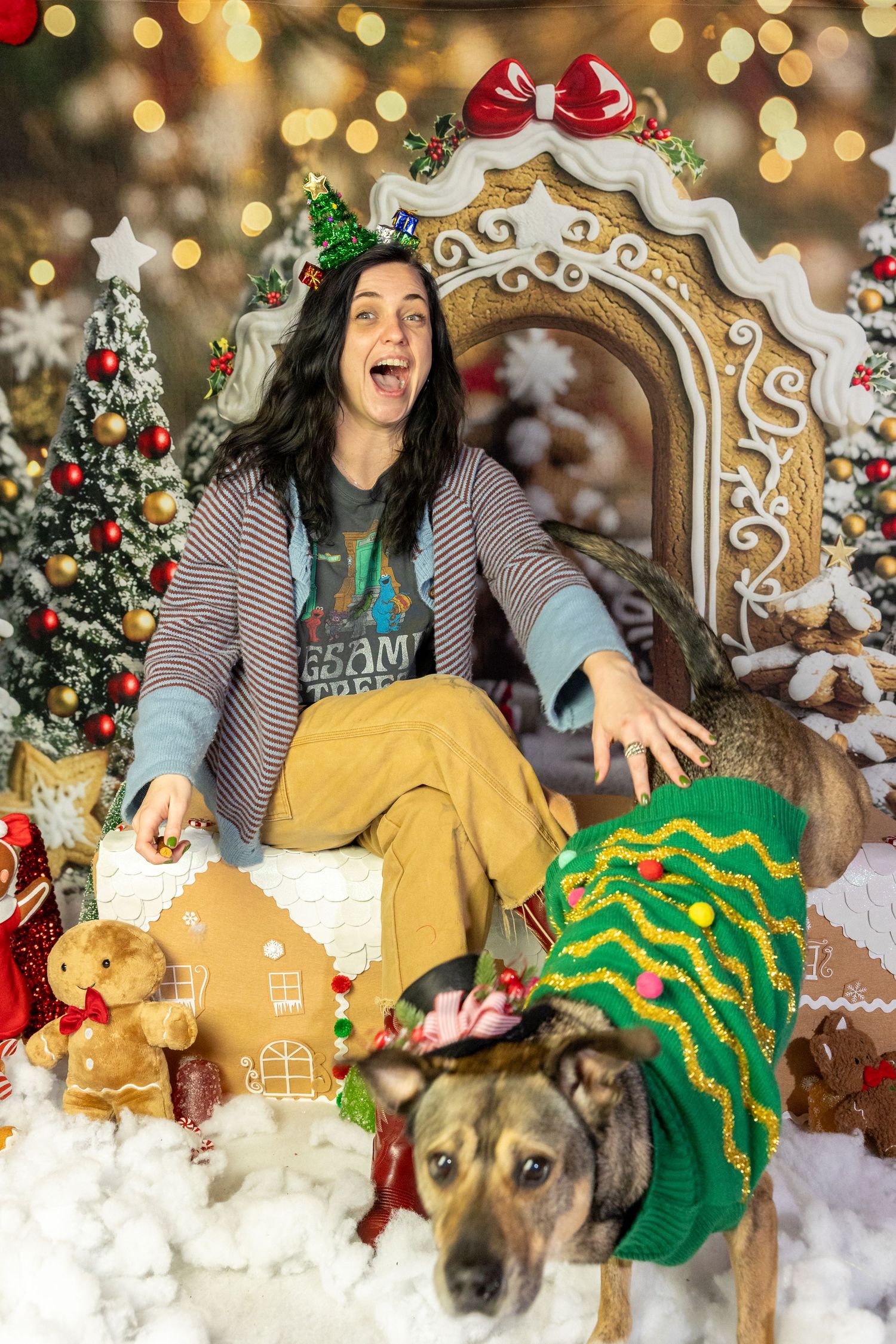
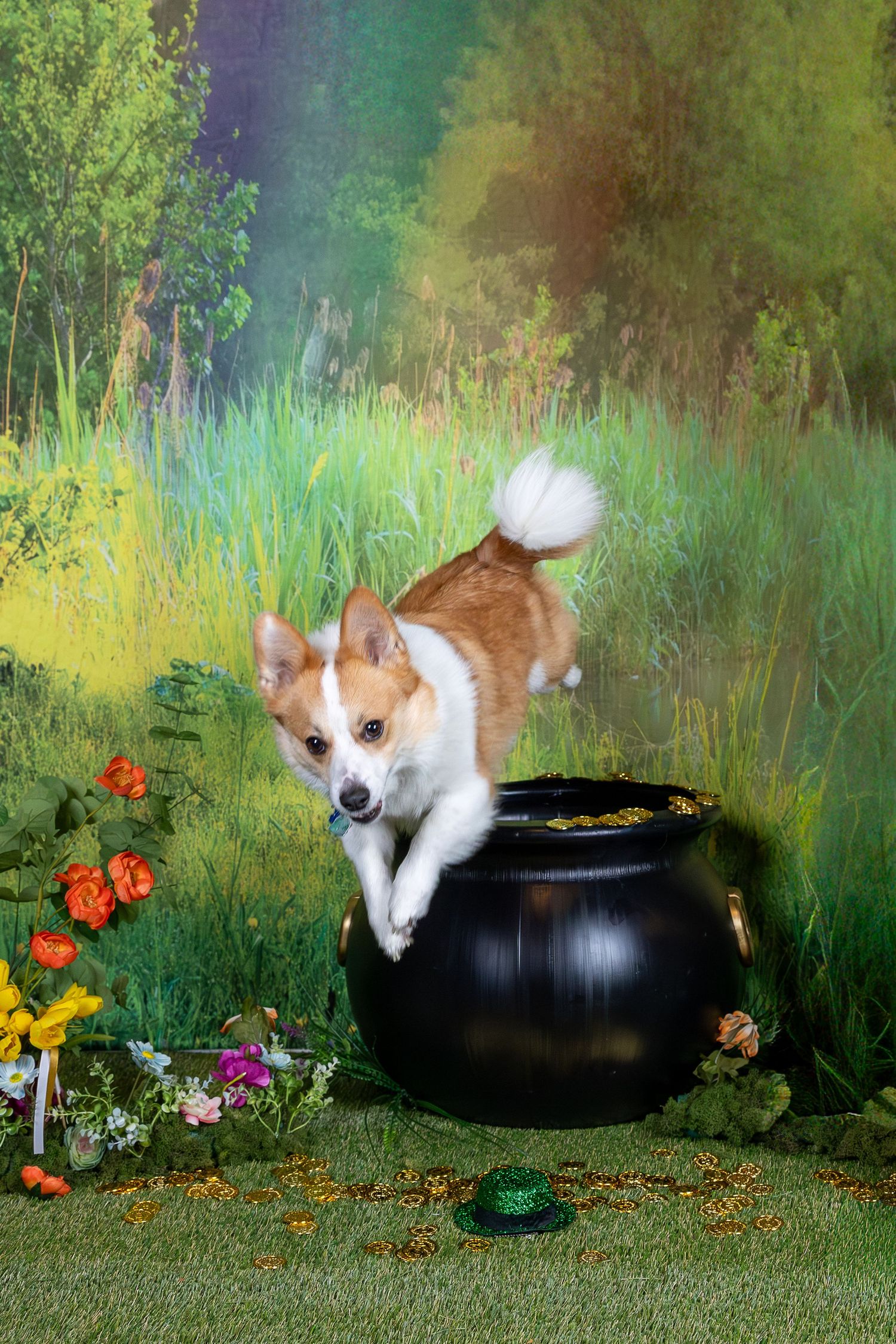
- High-energy puppies. We embrace the chaos. We don't ask the puppy to be still — we use the squeaky toy, run them out a little first, and shoot the in-between moments when they pause. Puppy sessions usually need a second person to help.
- Senior dogs. Shorter sessions, more breaks, lower-to-the-ground angles, gentle light. Often the best shots are of them resting in their favorite spot.
- Multiple dogs. Treats and a strict treat-rationing plan. Usually I'll photograph each dog individually first, then bring them together at the end when they're worn out and easier to manage as a group. Three is the upper limit before I really need a second hand.
- Reactive dogs. I want to know in advance, and we plan around their triggers. On-location sessions in quiet spots usually work better than the studio for reactive dogs because there's more space to give them.
What I'm actually trying to capture
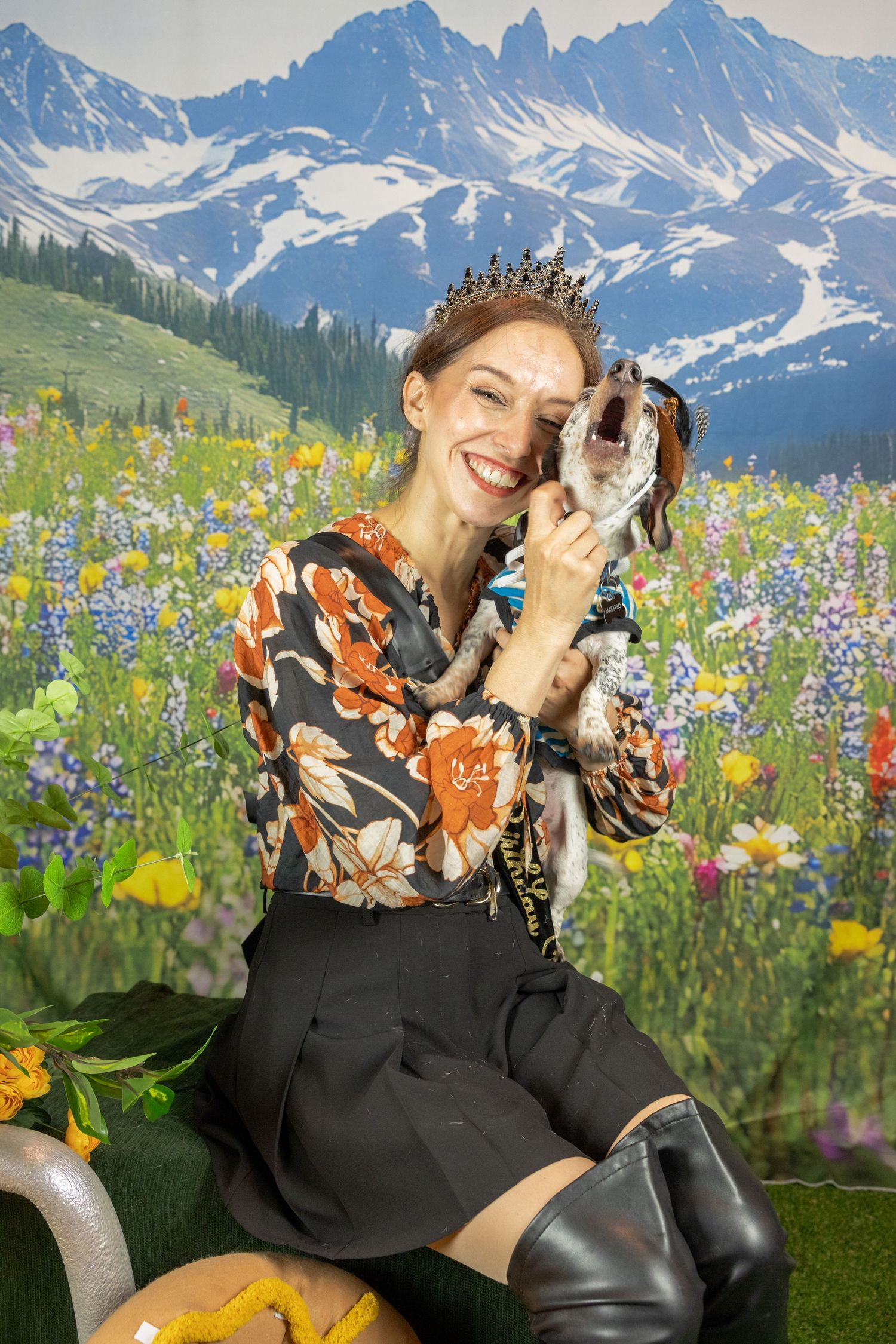
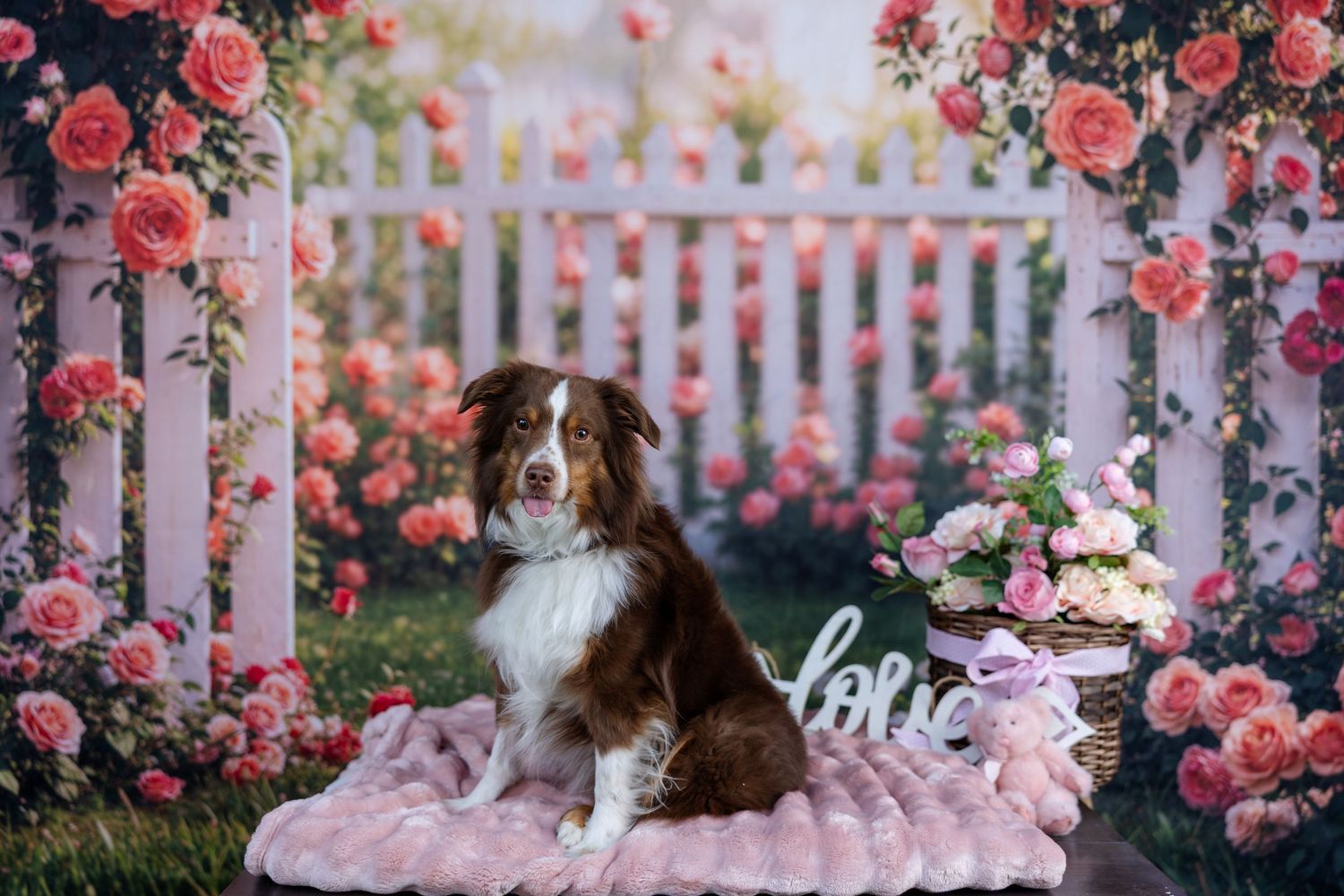
I'm not trying to make your dog look like a different dog. I'm trying to capture them as they are. That means the photos that come out of my sessions tend to look honest. Sometimes that's the perfect ear-up alert portrait. Sometimes it's the goofy mid-bark frame, the half-smile while they're panting, the moment they lean into your leg, the floppy ears mid-shake-off. Those are usually the photos people end up framing — not the posed ones.
The "magic shot" comes from connection, not control. Most of what I do during a session is set up the conditions for connection to happen, then catch it when it does.
Booking
If you've been on the fence because you're worried your dog won't cooperate, I hope this helped. The dogs that "won't cooperate" usually make the best photos. Bring them anyway.